
On This Page
- 12 min read
Binge Drinking: How Do I Know if I'm Drinking Too Much?
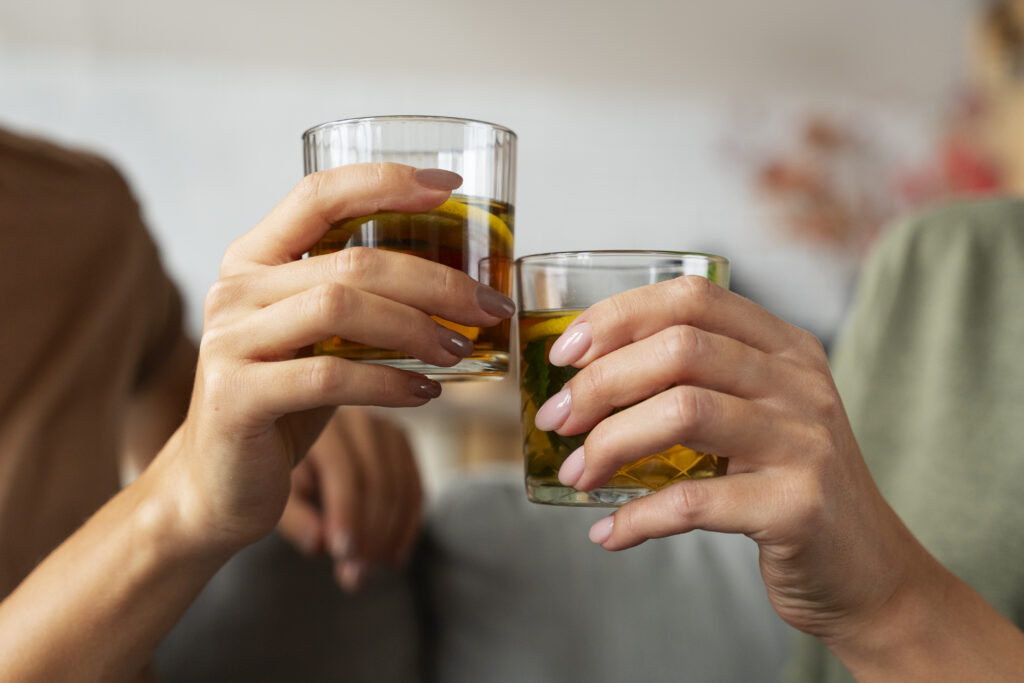
The moment you wonder: "Am I drinking too much?"
That question—“Am I drinking too much?”—usually hits in real moments: Sunday scaries, a hazy memory gap, or a friend’s raised eyebrow. You replay last night and realize you drank more than planned, skipped water, maybe skipped dinner. It’s common. About 1 in 6 U.S. adults binge drink, and many underestimate their pours. We’ll get you clarity fast: a plain‑English definition, a two‑minute self‑check, and a green/yellow/red flags snapshot you can use tonight. Prefer action? Take the 7‑question self‑check or jump to the tips.
Or maybe it’s not chaos—just feeling off: waking at 3 a.m., thirsty and wired, wondering why. You’re not broken; culture normalizes heavy pours and rounds. People who binge typically do it about four times a month, often with bigger servings than they realize. Our guide meets you where you are: what a standard drink looks like, how many drinks count as “binge” for you, a quick self‑check, and practical harm‑reduction moves for your very next night out.
Next, we’ll define binge drinking precisely—standard drinks, blood alcohol concentration (BAC) basics, and real‑world pour sizes—so you can compare your patterns against evidence-based thresholds.
What counts as binge drinking (and what a standard drink really is)
We teed this up a second ago—so what exactly counts, and how do you measure it at a bar? NIAAA (National Institute on Alcohol Abuse and Alcoholism) defines binge drinking as reaching about 0.08% blood alcohol concentration (BAC) within ~2 hours—usually 5+ drinks for men, 4+ for women. A standard drink equals ~14 grams of pure alcohol. Pours vary, so two cocktails can equal four. Your body clears about one standard drink per hour; only time lowers BAC—no drink or hack reduces impairment.
Why count? Because the “drink” in your hand might be 1.5–2+ standard drinks. A 16 oz pint of 7% IPA can equal nearly two. A 9 oz restaurant wine pour is ~1.8. Double pours and tiki drinks often hide 2 shots. ABV (alcohol by volume) differs across brands, so matching your intake to standard drinks gives you real control and safer pacing.
Use this quick chart to translate what you’re actually served into standard drinks, so your counting stays honest.
| Beverage | Typical ABV/Proof | 1 Standard Drink Equals | Examples/Notes |
|---|---|---|---|
| Regular beer | ~5% ABV | 12 oz (355 ml) | Cans/bottles; pint (16 oz) = ~1.3 drinks |
| Light beer | ~4.2% ABV | 12 oz (355 ml) | ‘Less’ perception; still adds up fast |
| Craft IPA | ~6.5–7.5% ABV | ~9–11 oz | 16 oz pour can be 1.5–2+ drinks |
| Wine | ~12% ABV | 5 oz (148 ml) | Restaurant pours 6–9 oz (1.2–1.8 drinks) |
| Fortified wine | ~17–20% ABV | 3–3.5 oz | Smaller glass still equals a full drink |
| Spirits (80 proof) | 40% ABV | 1.5 oz (44 ml) | One shot; cocktails may contain 2+ shots |
| Hard seltzer/malt | ~5–7% ABV | 12 oz (5%) or 8–9 oz (7%) | Labels vary by brand; check can ABV |
So why do smart people miss this in real life? Social cues, tall cans, free pours, and oversized glassware blur the math—making heavy rounds feel “normal” and turning moderate nights into binge territory without you noticing.
Why binge drinking feels normal—but isn’t
That blur you noticed—tall cans, free pours, oversized glasses—shows up everywhere: tailgates, bottomless brunch, weddings, office happy hours. In groups, rounds arrive faster than conversation. You sip to keep pace. Pitchers and doubles quietly turn one “drink” into two, and refills reset your count. No judgment—social settings are built for speed. And they’re common: about 1 in 6 U.S. adults binge drink. When the environment accelerates you, even careful plans can slide without you realizing it.
When it seems like “everyone’s doing it,” your brain files it under normal. But normal doesn’t equal safe. Blood alcohol concentration (BAC—the percent of alcohol in your blood) rises fast with large pours. A 9 oz wine is nearly two standard drinks; two in an hour can push some people near 0.08% BAC. Add shots or high‑ABV (alcohol by volume) beer and the climb is steeper. Prevalence makes it familiar. Familiar can still be risky, especially in compressed drinking windows.
Watch for these subtle normalization signals that nudge you past what you intended:
- Happy hour “deals”: Bigger glasses or doubles feel like bargains but hide extra shots
- Group rounds: Keeping up compresses two to three drinks into a single hour
- Bottomless offers: Automatic refills erase your mental tally after the second pour
- Home pours: Freehand glugs often beat 1.5 oz spirits or 5 oz wine by a lot
- Craft strength creep: 7–10% beers and stiff cocktails pack 1.5–3 drinks each
So what does “normal” actually cost you day to day? Let’s look at the toll you can feel first.
The hidden costs you feel before anyone calls it a problem
“I’m fine.” Then 3 a.m. hits—thirsty, wired, heart racing. Sleep is choppy, your workout gets skipped, and the day starts two steps behind. You scroll and cringe at a risky post or a blunt text. Lunch becomes DoorDash, and the tab from last night stings. A meeting slips, or your focus does. These aren’t moral failings; they’re early signals. The good news? Early signals are fixable. Small changes tonight—pacing, food first, water between—can calm sleep, protect your wallet, and dial down next‑day anxiety.
We see another pattern: you keep promises to everyone but yourself. You said two and stopped at six because rounds arrived fast and someone ordered shots. You didn’t plan to Uber both ways and buy late‑night food, but that’s how the math landed. Weekend‑only drinking still adds up when pours are big. None of this means you’re a “bad drinker.” It means the setting is stacked. Naming the pattern gives you leverage. Once you see it, you can steer—without giving up your social life.
Spot patterns from the last 30–60 days with this quick, no‑shame checklist:
- Blackouts or memory gaps after “a few”
- Promising two, stopping at six or more
- More arguments or next‑day apologies
- Skipping workouts or plans due to hangovers
- Anxiety spikes (“hangxiety”) the following day
- Uber and food spending surges on nights out
- Ignoring next‑day obligations or sliding deadlines
- Needing “hair of the dog” just to steady nerves
If a night turns from rough to risky, know the urgent red flags—and how to act immediately.
When it’s dangerous: Alcohol poisoning and crisis signs
You just asked for urgent red flags—if a night turns from rough to risky, this is the line: alcohol poisoning (dangerously high blood alcohol) is a medical emergency and can be fatal. If you’re unsure, call. We’d rather you be safe. Watch breathing, consciousness, skin color, vomiting, and seizures. If there’s talk of self-harm, act immediately. Many places have Good Samaritan protections for callers. 988 is the Suicide and Crisis Lifeline.
Here’s your act-now list—use it for yourself or a friend.
- Breathing: Slow, irregular, or fewer than 8 breaths per minute—call 911
- Consciousness: Won’t wake, unresponsive, or repeated fainting—call 911
- Vomiting: Persistent vomiting or choking risk—call 911 and place on side
- Skin: Pale, bluish, or clammy skin; low body temperature—call 911
- Seizures: Any seizure activity—call 911 immediately
- Suicide risk: Talk of self-harm or hopelessness—call 988 or 911
If none of these apply, take a breath—we’ll use a simple matrix to spot patterns over weeks, not just emergencies.
Are my patterns risky? A quick self-assessment matrix
Risk lives in three buckets: frequency (how often), intensity (how much/how fast), and consequences (what happens after). Circle where you land today. This is a starting point, not a diagnosis. Use it to guide safer choices this week and track change.
| Pattern Signal | What it looks like | Why it matters | Risk level |
|---|---|---|---|
| Occasional binge (monthly) | 4–5+ drinks in ~2 hours on rare occasions | Still spikes BAC; accidents and blackouts possible | Lower to moderate |
| Weekend warrior | Weekly 4–6+ drinks in ~2–3 hours | Repeated high BAC; sleep, mood, and blood pressure suffer | Moderate |
| Loss of control | Often exceed planned limit by 2+ drinks | Impaired judgment; harder to stop once started | Moderate to higher |
| Drinking to cope | Use alcohol for stress, anxiety, or sleep | Increases dependence risk; masks underlying issues | Higher |
| Aftermath problems | Fights, missed work, legal/financial issues | Functional harm suggests significant impairment | Higher |
Next, we’ll show who is more at risk and build a simple, science-aligned plan—so your nights feel safer and your mornings calmer.
Who is most at risk (and why)
You asked who’s more at risk—and then a plan. Binge drinking cuts across groups, but it clusters by age, setting, and role; biology matters too (women can reach higher blood alcohol with fewer drinks). Use this to personalize, not to judge.
Scan these higher-risk groups and contexts seen in national surveys, then circle the two that fit you best to focus your plan.
- Young adults (18–34): Highest prevalence; fast-paced social settings
- College students: Party culture; compressed 2–3 hour windows
- Men: Higher reported binge rates than women
- Veterans and service members: Stress, cohesion rituals, transitions
- Higher-income earners: More occasions, travel, and access
- Social-heavy jobs: Frequent client events, hospitality, conferences
- High bar density areas: Easier access, later hours
See yourself in one or two? Great—now let’s turn awareness into action with a four-part plan you can start tonight.
The 4-part plan to regain control (and keep your social life)
Here’s our four-part plan we use with readers who want change without losing their social life: measure what you actually drink, add simple guardrails, shift the contexts that push speed, and bring in light support. It’s flexible and iterative—try it for two weeks, review, and adjust. Save this to your phone or print it for your wallet.
Expect progress, not perfection. Step 1 helps you see real pours and timing. Step 2 sets limits and pacing rules before the first sip. Step 3 swaps triggers—like shots or top-offs—for lower-ABV (alcohol by volume) choices or non-alcoholic starts. Step 4 adds accountability—a friend, a text reminder, or a clinician if needed.
Step 1: Measure — Track actual pours for 7 nights with standard-drink math (12 oz beer 5%, 5 oz wine 12%, 1.5 oz spirits 40%). Note start/stop times, food, and mood. Seeing patterns makes change easier.
Step 2: Guardrails — Decide your limit now (e.g., 2–3 max), pace at one drink per hour, alternate with water, and set cut-off time. Plan your ride home. Cash or a drink budget helps you keep promises to yourself.
Step 3: Replace triggers — Swap the first drink for food or a zero-proof start; choose lower-ABV (alcohol by volume) options; skip shots and top-offs. Move away from the bar, switch venues, or order half-pours to slow pace without leaving the group.
Step 4: Add support — Tell one trusted friend your plan and ask for a check-in text. Use a code word to leave or skip a round. If cutting back is hard, schedule a chat with your primary care or a therapist.
Now let’s turn that plan into do-this-tonight tactics—so your next outing is safer, simpler, and still fun.
Harm-reduction playbook for your next night out
You asked for do-this-tonight tactics—here they are. Harm reduction slows your BAC (blood alcohol concentration) rise, reduces risky decisions, and makes mornings calmer. Quick proof: two drinks over two hours with water and food feels very different than four in one hour. Pick any three tactics below. We use this playbook with our community. Save them to your notes, text a friend, and run the plan tonight.
We’ll walk from before you go, to first round, to the ride home.
- Before you go: Eat protein and complex carbs; drink 16–24 ounces water. Example: burrito bowl and a big water bottle.
- First round: Start alcohol-free—soda, seltzer, or a zero-proof mocktail. This slows pace and lets you feel the room first.
- Pacing: Cap at one standard drink per hour; set a 60‑minute timer to cue water and a check‑in.
- Alternating: After each drink, order sparkling water with lime. Count it as a round. Your tab and peak BAC both drop.
- ABV choice: Pick 4–5% beers, spritzers, or shandies over strong cocktails. ABV (alcohol by volume) tells you strength—lower keeps the curve flatter.
- Serving size: Choose 12‑ounce bottles over 16–22‑ounce pours. Smaller containers make counting honest and slow silent top‑offs.
- Rounds: Skip shots and say, “I’m pacing tonight—cheers.” Hold a water or soda so your hands stay busy and pressure drops.
- Buddy plan: Text a friend your limit and check‑in time. Example: “Max 3, home by 11.” Ask them to reply once mid‑evening.
- Exit cue: Schedule your ride for a set time now—Uber, Lyft, or a cab. Alarms end “one more?” debates for you.
- Post‑event: Log start/stop times, total standard drinks, water rounds, and sleep quality. Note one win and one tweak for next time.
Next, a simple dashboard turns these moves into habits—see streaks, money saved, better sleep, and easier choices.
See momentum: A simple progress dashboard
Let’s make that dashboard real so last night’s tactics become habits. What you measure improves: take 10 minutes on Sunday to log the week, spot one win, and choose one tweak. For example, dropping one drinking day saved $45 and improved sleep by one point. Small changes, steady momentum.
| Metric | How to track | Target/Goal | Notes |
|---|---|---|---|
| Drinking days per week | Habit app or calendar dots | Reduce by 1 day over 2–3 weeks | Add new social plans on off-days |
| Max drinks per occasion | Log standard drinks per outing | Cap at 2–3 (or your clinician’s advice) | Pair with a hard stop time |
| Average drinks per hour | Use a timer; log start/finish times | ≤1 drink per hour | Alternate with water between rounds |
| Money spent on nights out | Bank app categories or notes | Cut 20–40% within one month | Reinvest in activities or fitness |
| Sleep quality | Wearable data or 1–5 morning rating | Improve average by 1 point | Stop drinking 3+ hours before bed |
| Next-day anxiety | Morning 1–10 rating | Trend downward over 2–4 weeks | Note which tactics help most |
Now let’s make those boundaries easier to say out loud—next up, simple scripts for friends, partners, and coworkers who care about you.
What to say—to a friend, partner, or yourself
You wanted those boundaries to be easier to say out loud—let’s make it simple. Lead with curiosity, not accusation. Name your behavior and goal, not someone else’s. Use our lines as starting points and tweak to sound like you.
Here are short, ready-to-use lines for common moments.
- To a friend: I’m testing a two‑drink limit—will you check me at three and hand me water?
- To a partner: I sleep terribly after more than two; can we plan an early exit and share a ride?
- To a host: I’m pacing tonight—mind if I bring seltzers and start with one?
- To yourself: If I pass my limit, I’ll switch to water, text my buddy, and call my ride.
- If someone raises concern: I appreciate you saying that—thank you. Can we talk tomorrow when I’m rested?
- If a friend worries you: I care about you; before we go out, can we set a plan and a check‑in time?
If cutting back feels hard, we’ll point you to professional options, helpful medications, and crisis lines you can call anytime.
When to seek help—and what it looks like
Cutting back feels hard—you asked for options and crisis support. It’s time to get help if: your two‑drink limit keeps becoming six, you’re drinking to cope with stress or sleep, you notice withdrawal (morning shakes, sweats, nausea), or consequences pile up—missed work, fights, DUIs. Another signal: people who care are worried, and you are too. Help comes in steps, from a brief primary‑care chat to structured outpatient or residential care. If you’re unsure, start with your doctor or a telehealth visit this week.
Needing help doesn’t make you weak; it makes you smart. Lots of people improve with small moves—one screening, two counseling visits, or a month of skills practice. Others benefit from medication that lowers cravings or programs that add structure and support. You choose the pace. We’ll map options with you, not at you, and keep them evidence‑based. If you’ve tried to cut back for 30 days without success, that’s data—not failure—and a great moment to bring in a clinician.
Here are evidence-backed paths to discuss with a clinician or explore locally.
- Primary care: A 15‑minute screening, basic labs (liver, lipids), brief advice, and referrals. Often the fastest, lowest‑cost first step—telehealth or in‑person.
- Therapy (CBT/MET): Cognitive‑behavioral therapy and motivational enhancement teach urge surfing, coping plans, and drink‑refusal skills. Weekly sessions; many therapists offer telehealth.
- Mutual‑help groups: AA (Alcoholics Anonymous), SMART Recovery, Moderation Management, and LGBTQ+‑affirming meetings. Free, daily, in‑person or online—try three formats to find your fit.
- Medications: Naltrexone, acamprosate, or disulfiram can reduce cravings or support abstinence. A clinician reviews risks, liver health, and whether daily or as‑needed dosing fits you.
- Intensive outpatient: 3–9 hours per week, multi‑disciplinary care (therapy, education, groups), and drug/alcohol testing as needed. You live at home and keep work or school.
- Inpatient/residential: 24/7 care with medical supervision, safe detox, daily therapy, and relapse‑prevention planning. Best for severe withdrawal risk, unsafe environments, or repeated failed outpatient attempts.
Next, we’ll share a gentle Reset Day—hydration, nutrition, sleep—to support recovery. Important: don’t manage withdrawal at home; if you have tremors, vomiting, or confusion, seek medical care immediately.
Wellness support on reset days (not a medical treatment)
About that Reset Day we mentioned: it’s gentle support—hydration, nutrition, and sleep—not treatment. If you have tremors, vomiting, confusion, or severe nausea, seek medical care immediately; don’t self-manage withdrawal at home. For everyday recovery after a heavy night, focus on basics: water and electrolytes (minerals that help fluid balance), simple meals with protein and complex carbs, and real sleep. Example: 16–24 ounces of water on waking, eggs and toast, then a short walk to shake off the fog.
Think of this as a body reset you can use anytime. We keep it simple: steady hydration (aim for 64–80 ounces across the day), balanced meals, and light movement to restore rhythm. Morning sunlight helps anchor your body clock—10–15 minutes is plenty. Small steps repeated win. Consistency beats intensity.
Here’s a short list of gentle practices for alcohol-free reset days.
- Hydration: Set a target of 64–80 ounces; sip hourly and pair with electrolytes after workouts or heat.
- Nutrition: Build meals around protein, fiber, and electrolytes; think eggs, yogurt, beans, greens, whole grains. Limit heavy sugar spikes.
- Sleep: Keep a consistent bedtime; dark, cool, quiet room; stop caffeine by early afternoon and screens 60 minutes before bed.
- Light movement: 20–30 minutes of walking or gentle yoga to reduce stress; add deep breaths or a short stretch break hourly.
- Reflection: Journal what helped urges pass and what didn’t; note triggers, people, places, and one small win to repeat.
- Cleanse hydration: Enjoy a chilled Optimal Kleen Detox Drink 16 fl oz with your water routine—pleasant, hydrating refreshment to sip alongside meals.
Now, see these steps in motion—a few weeks of real plans, nights out, and calmer mornings.
A week in the life: From ‘maybe too much’ to momentum
Let’s put those steps in motion with Jordan, a composite of readers. Week 1, Monday: quick self‑check, prints the standard‑drink card, sets a two‑drink cap for Friday, and schedules an 11 p.m. ride. Friday: eats first, picks 5% beer, alternates water, says “I’m pacing” when shots appear—home on time with 7/10 sleep. Saturday’s pregame tempts a third; Jordan sips seltzer, uses the buddy text, and leaves when the code word drops.
Week 2 brings a coworker birthday at a cocktail bar. Jordan opens with a zero‑proof drink, then a spritz (wine plus soda) and stays at one per hour. A friend tops off the glass; Jordan counts it as two, resets with water, and orders fries. Outcome: three drinks across three hours, no shots, ride at 10:45, and no 3 a.m. wake‑up.
By Sunday, the dashboard shows five drinking days down to four, max three drinks, and two alcohol‑free evenings with better sleep. After one slip at a house party, Jordan adjusts guardrails: no home pours, cash budget, and a hard stop at 10:30. The Reset Day Ritual makes Saturdays easier and the anxiety score drops a point. Momentum over perfection; next up is a no‑shots month and one early night each week.
Try it yourself: follow the 72‑hour quick‑start and set your first micro‑goal today.
Your next 72 hours: A quick-start checklist
Ready to try it yourself? We built this plan: pick your start day, set one bright‑line limit (e.g., max 3), and text a buddy. Use it for the next 72 hours.
- Today: Set a 2–3 drink cap and log pours as standard drinks (12 oz beer, 5 oz wine, 1.5 oz spirits). Start a notes log.
- Pre‑event: Eat a protein‑plus‑carbs meal, plan your ride there and back, and schedule a hard stop time on your phone (e.g., 10:45 p.m.).
- First round: Start alcohol‑free (seltzer or soda), then order if you still want one. Set a 60‑minute timer to cue water and a check‑in.
- During: Alternate each drink with seltzer, pace at one per hour, and skip shots/top‑offs. Hold a water so “I’m good” is easy.
- Social: Tell one person your plan—“Max 3, home by 11”—and ask for a mid‑evening check‑in text. Use a code word to leave early.
- After: Rate sleep and mood (1–10), note money spent, and jot any regrets or wins. Log total standard drinks and your last drink time.
- Tomorrow: Review what worked, then tweak one guardrail—earlier cut‑off, lower‑strength choices, or no shots. Schedule next week’s plan and a 10‑minute Sunday review.
Want deeper backup and tools? Head to our evidence, safety guides, and trackers to go further.
Evidence and resources to go deeper
You asked for deeper backup—here are trusted, plain-English sources we rely on for definitions, self-checks, safety steps, and finding care fast when you—or a friend—need it.
- NIAAA (National Institute on Alcohol Abuse and Alcoholism): Official binge-drinking definitions and Rethinking Drinking tools—standard drink calculator, personal risk worksheets, and tips to cut back tonight.
- CDC (Centers for Disease Control and Prevention): Alcohol facts, alcohol poisoning red flags, Good Samaritan notes, and statistics you can compare against your age and setting.
- SAMHSA (Substance Abuse and Mental Health Services Administration): 24/7 National Helpline 1-800-662-HELP (4357) and an online treatment locator for nearby outpatient, inpatient, and telehealth options.
- NIH MedlinePlus (National Institutes of Health): Plain-language overviews on alcohol effects, withdrawal, medications like naltrexone, and when to seek urgent medical care.
- CollegeAIM (College Alcohol Intervention Matrix): Evidence ratings for campus programs and policies; great for student leaders and parents comparing what actually reduces binge episodes.
- Screening tools: AUDIT-C (three-question Alcohol Use Disorders Identification Test) and single-item screens—print and discuss with your clinician or complete during a primary-care visit.
- Local care search: Start with your insurer’s directory, PsychologyToday filters (licensure, telehealth), and state boards to verify licenses; confirm alcohol-specialty experience and medication management options.
Next: who wrote this, our medical review, and update policy.
About this guide: authorship, medical review, and disclaimer
You asked who wrote this, how we review it, and how often we update it—fair questions. I’m Alex Rivera, Health Writer & Editor at Natural Cleanse Detox. I turn complex research into clear, practical steps you can use tonight. This guide was medically reviewed by a licensed clinician with primary‑care experience. Last reviewed: February 2026. Our mission is simple: support your wellness with natural ingredients and science‑backed guidance. Our products, including the Optimal Kleen Detox Drink (16 fl oz), are wellness supports—not medical treatments or cures.
We follow clear editorial standards so you can trust every line. We cite primary sources (NIAAA, CDC, WHO, SAMHSA, NIH MedlinePlus) and avoid unsupported claims. Each guide moves through a three‑step process: research and sourcing, clinical review for accuracy, then a plain‑English edit for clarity. We update content at least every 6 months—or sooner if guidance changes. See something we should improve? Send a note; we correct verified issues quickly and add a visible update date.
This article is informational and not a substitute for professional diagnosis or treatment. Seek qualified care for concerns about alcohol use or withdrawal. If you’re unsure or in crisis, call 911 or 988 (Suicide & Crisis Lifeline) immediately.
Get Expert Help
Have a question about testing?